
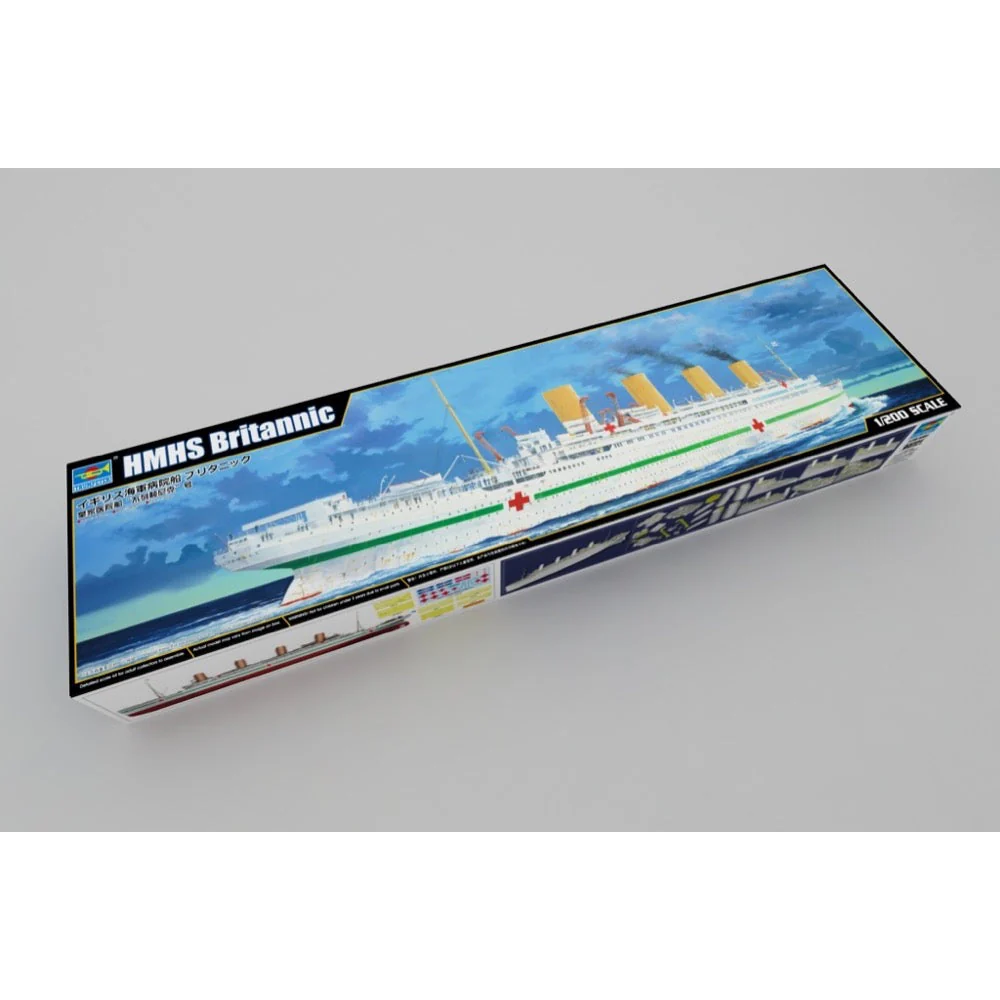
Trumpeter 03721 1/200 Britannic
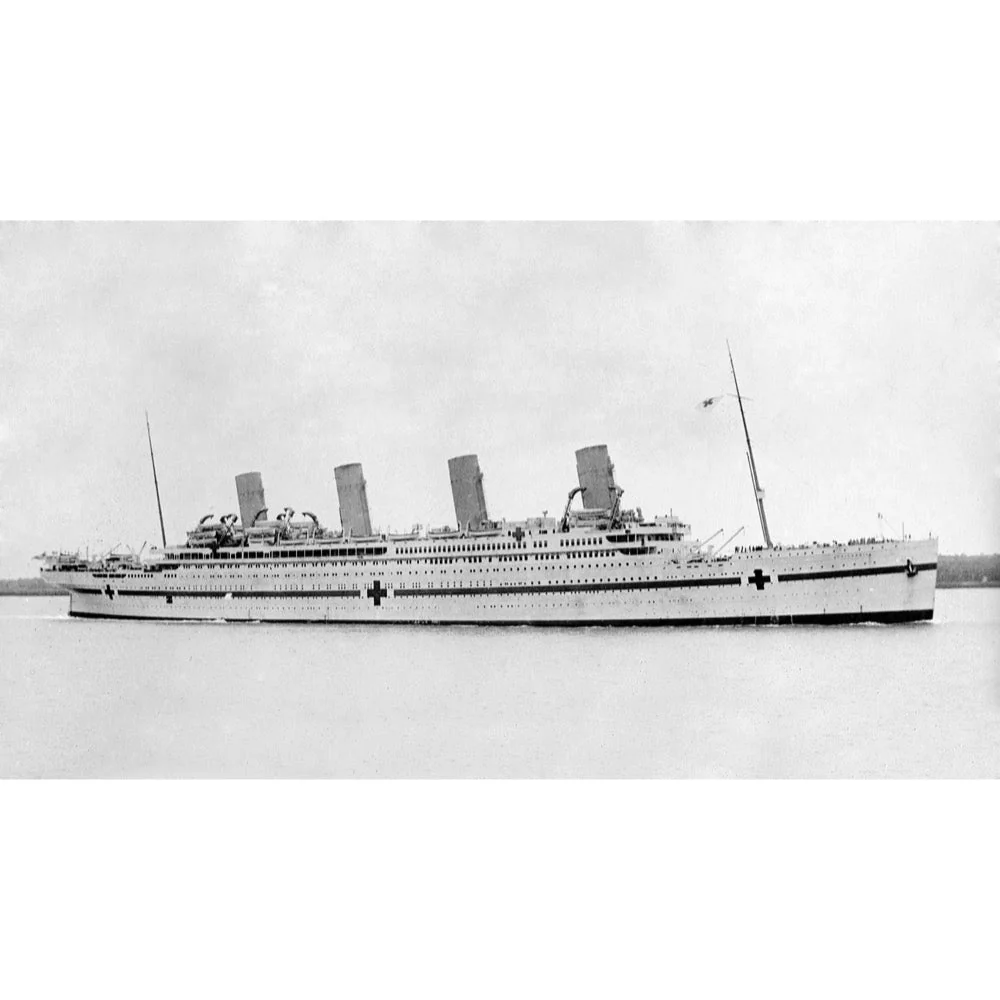
HMHS Britannic was the third and final vessel of the White Star Line's Olympic class of ocean liners and the second White Star ship to bear the name Britannic. She was the younger sister of RMS Olympic and RMS Titanic and was intended to enter service as a transatlantic passenger liner. She operated as a hospital ship from 1915 until her sinking near the Greek island of Kea, in the Aegean Sea at position 37°42′05″N 24°17′02″E, in November 1916. At the time she was the largest hospital ship in the world, and the largest vessel built in Britain.
Britannic was launched just before the start of the First World War. She was designed to be the safest of the three ships with design changes made during construction due to lessons learned from the sinking of the Titanic. She was laid up at her builders, Harland & Wolff, in Belfast, for many months before being requisitioned as a hospital ship. In 1915 and 1916 she operated between the United Kingdom and the Dardanelles.
On the morning of 21 November 1916, she hit a naval mine of the Imperial German Navy near the Greek island of Kea and sank 55 minutes later, killing 30 of 1,066 people on board; the 1,036 survivors were rescued from the water and from lifeboats. Britannic was the largest ship lost in the First World War. After the War, the White Star Line was compensated for the loss of Britannic by the award of SS Bismarck as part of postwar reparations; she entered service as RMS Majestic. The wreck of the Britannic was located and explored by Jacques Cousteau in 1975. The vessel is the largest intact passenger ship on the seabed in the world. It was bought in 1996 and is currently owned by Simon Mills, a maritime historian.
Features
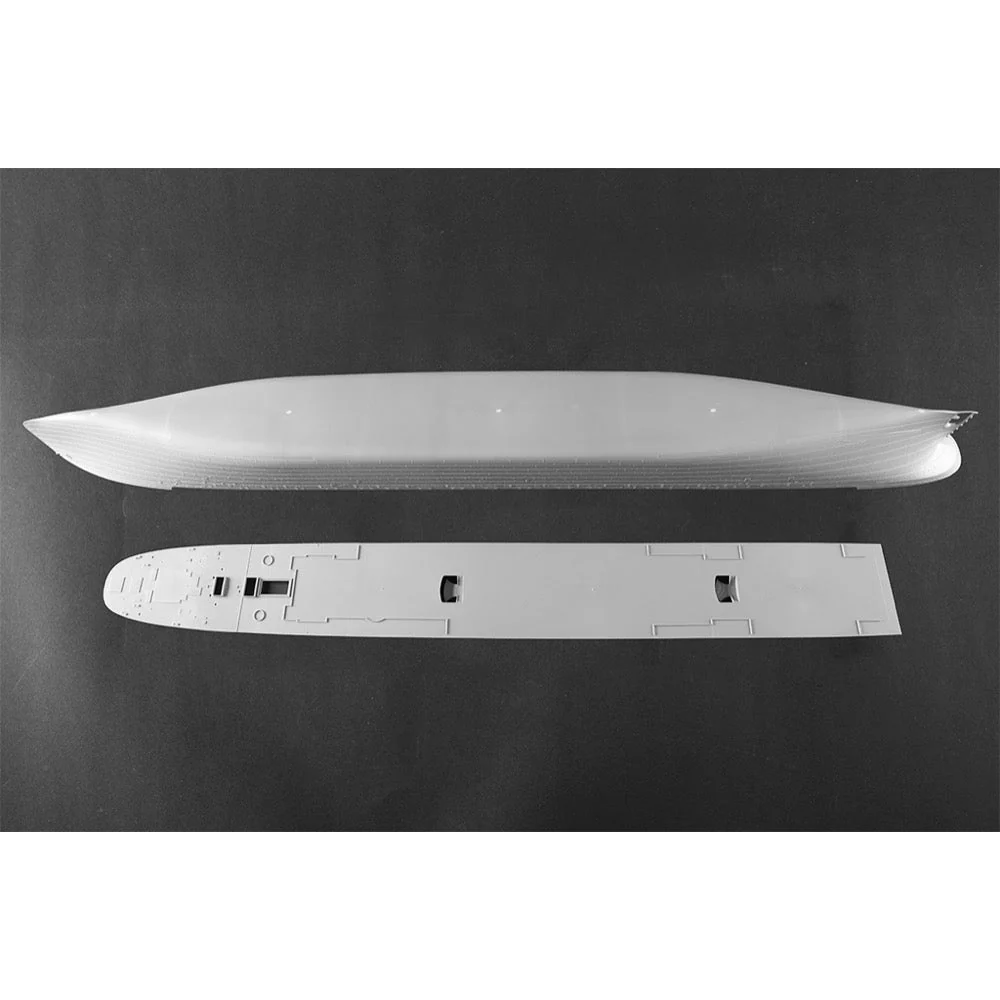
- One-piece hull made from two-directional slide molds
- Deck pattern finely rendered.
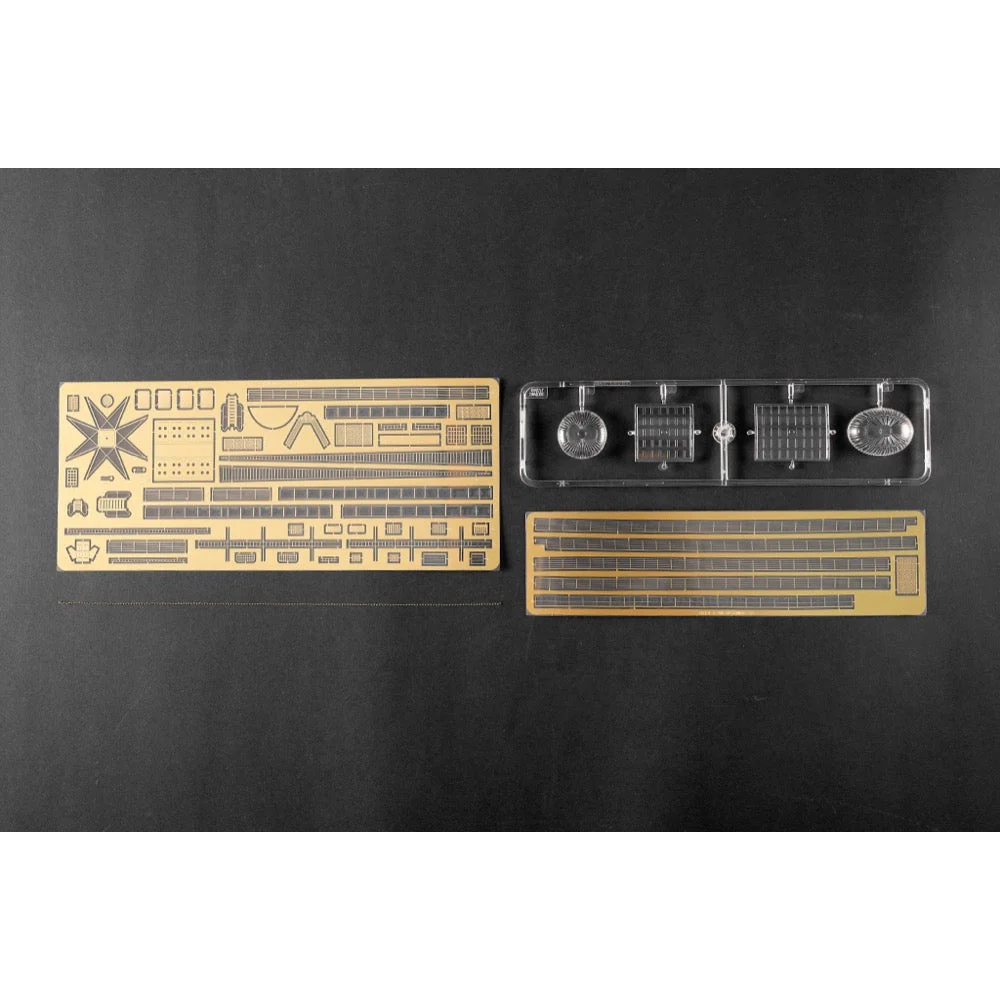
- 11 pieces of photo etched frets for handrais,ladders etc.
- Stand included
- Model Brief: Length: 1347mm Beam: 144.6mm
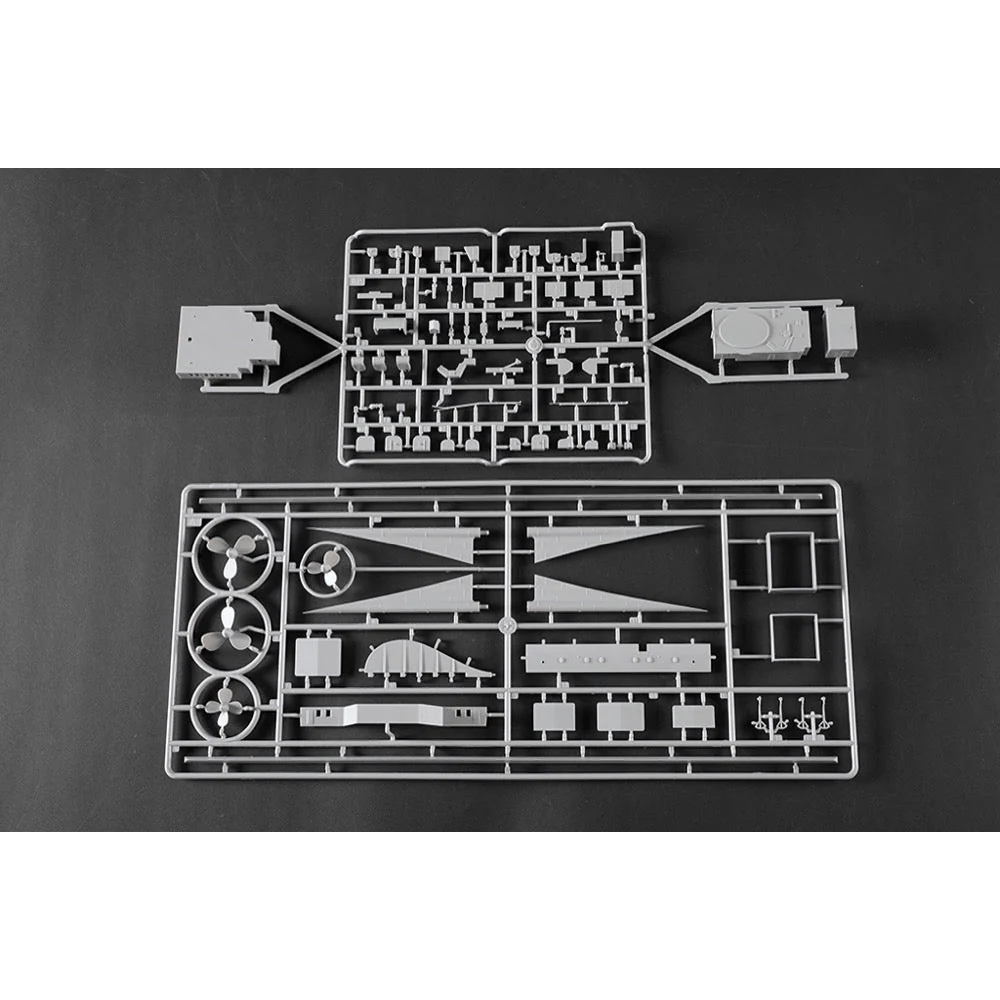
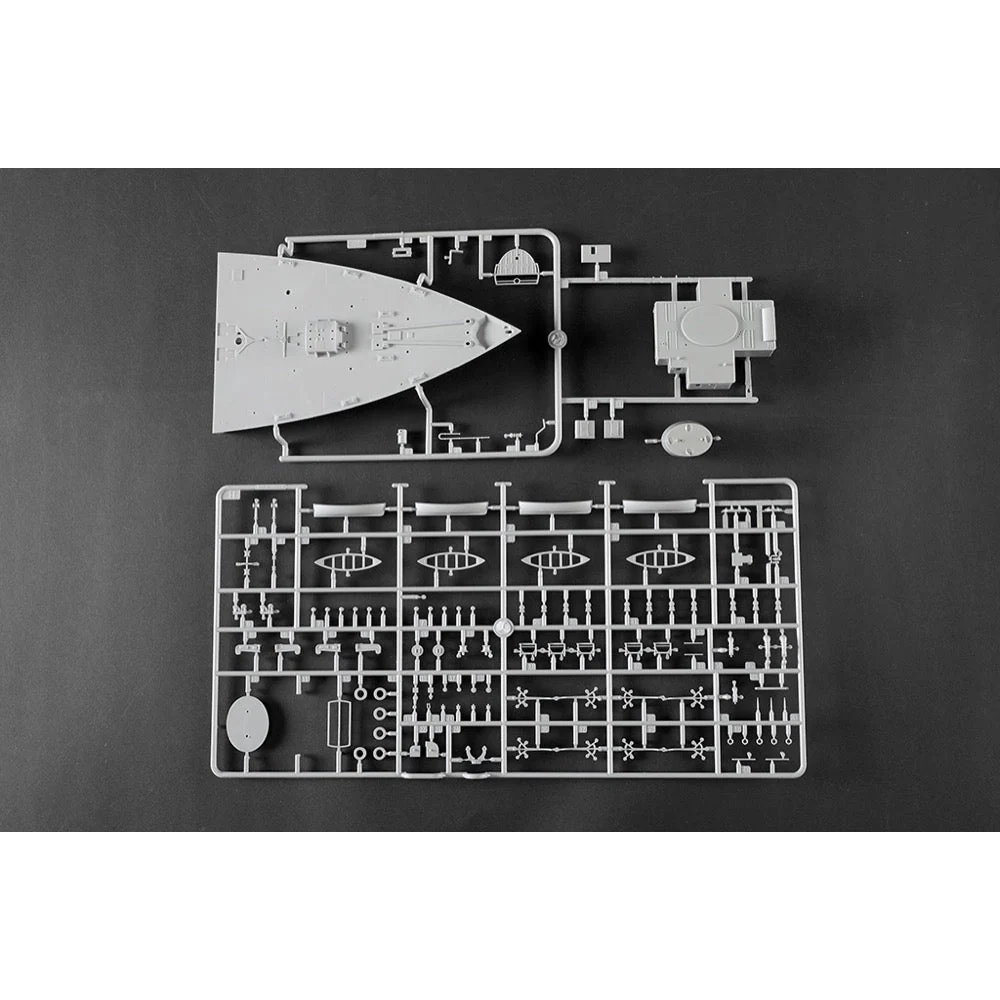
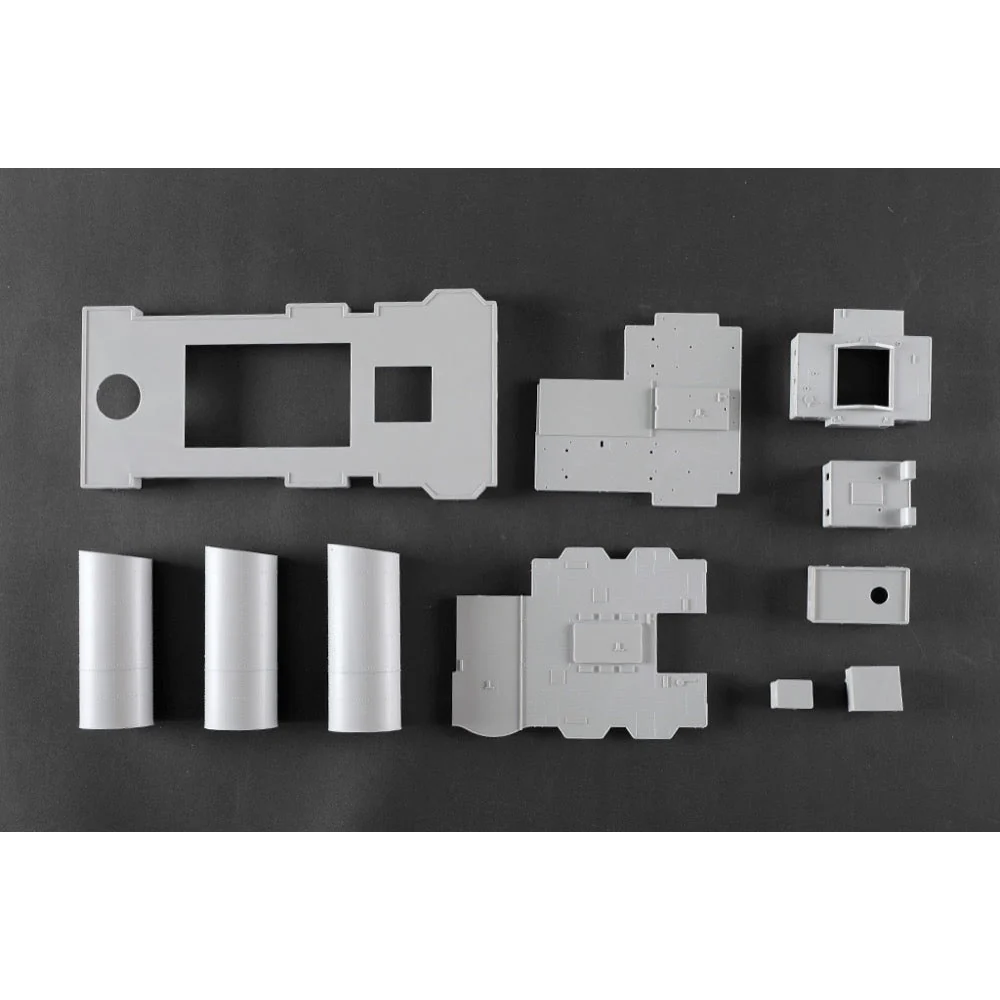
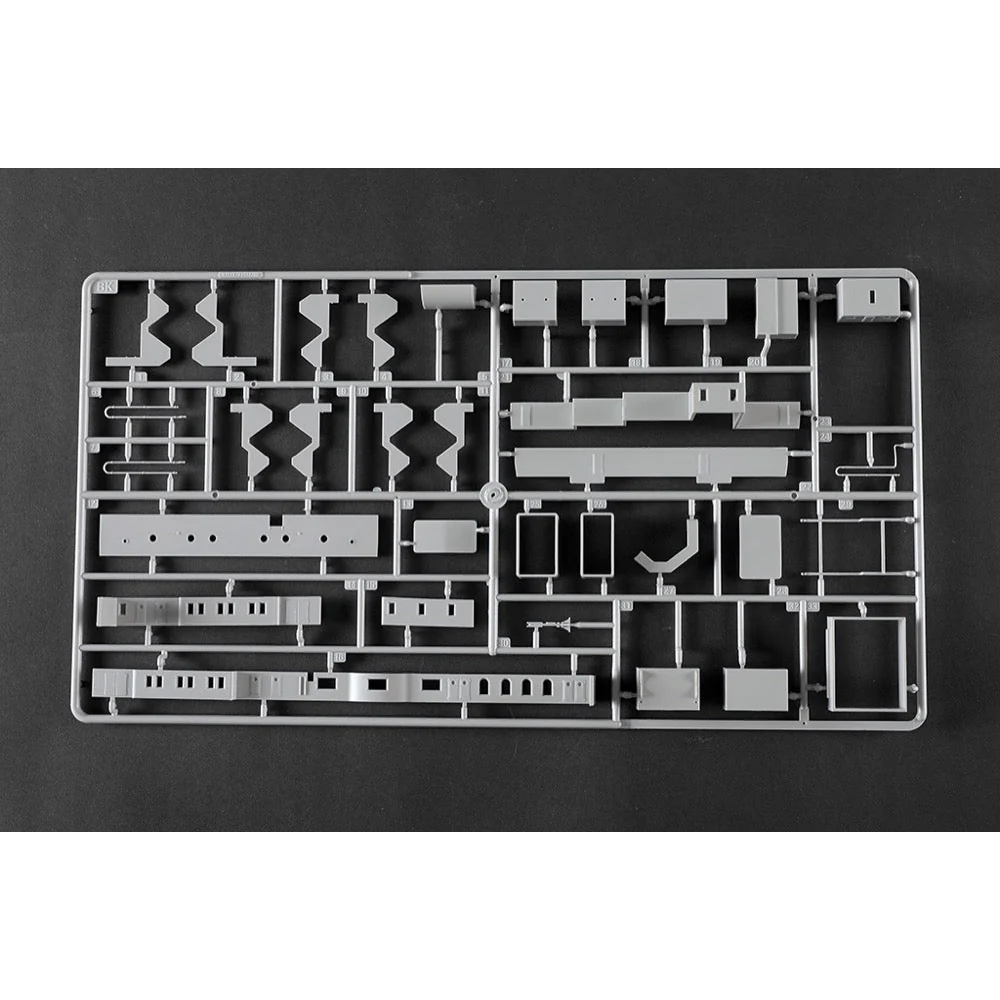
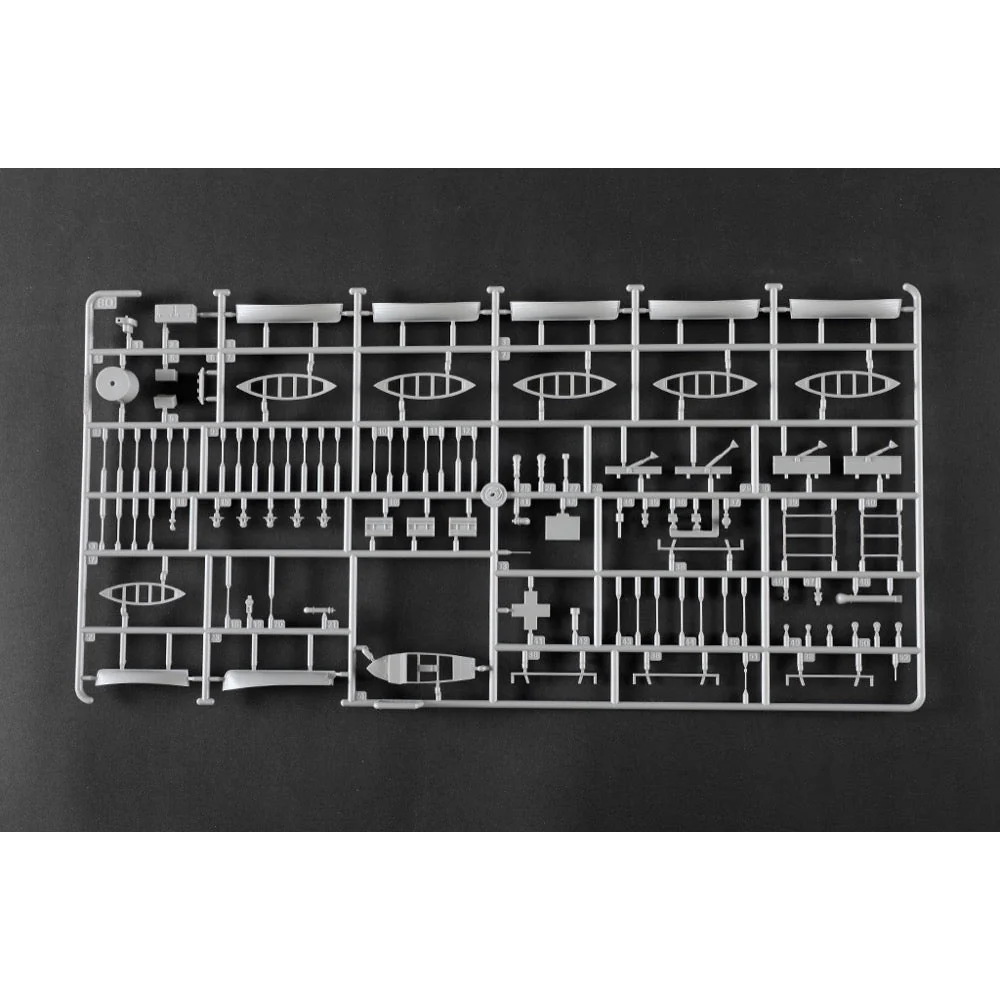
- Total Parts: 2170+
- Metal Parts: anchor chain
- Photo Etched Parts: 11 pcs
- Total Sprues: 27 sprues , hull ,decks and stand
More Images















Trumpeter 03721 1/200 Britannic
HMHS Britannic was the third and final vessel of the White Star Line's Olympic class of ocean liners and the second White Star ship to bear the name Britannic. She was the younger sister of RMS Olympic and RMS Titanic and was intended to enter service as a transatlantic passenger liner. She operated as a hospital ship from 1915 until her sinking near the Greek island of Kea, in the Aegean Sea at position 37°42′05″N 24°17′02″E, in November 1916. At the time she was the largest hospital ship in the world, and the largest vessel built in Britain.
Britannic was launched just before the start of the First World War. She was designed to be the safest of the three ships with design changes made during construction due to lessons learned from the sinking of the Titanic. She was laid up at her builders, Harland & Wolff, in Belfast, for many months before being requisitioned as a hospital ship. In 1915 and 1916 she operated between the United Kingdom and the Dardanelles.
On the morning of 21 November 1916, she hit a naval mine of the Imperial German Navy near the Greek island of Kea and sank 55 minutes later, killing 30 of 1,066 people on board; the 1,036 survivors were rescued from the water and from lifeboats. Britannic was the largest ship lost in the First World War. After the War, the White Star Line was compensated for the loss of Britannic by the award of SS Bismarck as part of postwar reparations; she entered service as RMS Majestic. The wreck of the Britannic was located and explored by Jacques Cousteau in 1975. The vessel is the largest intact passenger ship on the seabed in the world. It was bought in 1996 and is currently owned by Simon Mills, a maritime historian.
Features
- One-piece hull made from two-directional slide molds
- Deck pattern finely rendered.
- 11 pieces of photo etched frets for handrais,ladders etc.
- Stand included
- Model Brief: Length: 1347mm Beam: 144.6mm
- Total Parts: 2170+
- Metal Parts: anchor chain
- Photo Etched Parts: 11 pcs
- Total Sprues: 27 sprues , hull ,decks and stand
Product Information
Product Information
Shipping & Returns
Shipping & Returns
Description
HMHS Britannic was the third and final vessel of the White Star Line's Olympic class of ocean liners and the second White Star ship to bear the name Britannic. She was the younger sister of RMS Olympic and RMS Titanic and was intended to enter service as a transatlantic passenger liner. She operated as a hospital ship from 1915 until her sinking near the Greek island of Kea, in the Aegean Sea at position 37°42′05″N 24°17′02″E, in November 1916. At the time she was the largest hospital ship in the world, and the largest vessel built in Britain.
Britannic was launched just before the start of the First World War. She was designed to be the safest of the three ships with design changes made during construction due to lessons learned from the sinking of the Titanic. She was laid up at her builders, Harland & Wolff, in Belfast, for many months before being requisitioned as a hospital ship. In 1915 and 1916 she operated between the United Kingdom and the Dardanelles.
On the morning of 21 November 1916, she hit a naval mine of the Imperial German Navy near the Greek island of Kea and sank 55 minutes later, killing 30 of 1,066 people on board; the 1,036 survivors were rescued from the water and from lifeboats. Britannic was the largest ship lost in the First World War. After the War, the White Star Line was compensated for the loss of Britannic by the award of SS Bismarck as part of postwar reparations; she entered service as RMS Majestic. The wreck of the Britannic was located and explored by Jacques Cousteau in 1975. The vessel is the largest intact passenger ship on the seabed in the world. It was bought in 1996 and is currently owned by Simon Mills, a maritime historian.
Features
- One-piece hull made from two-directional slide molds
- Deck pattern finely rendered.
- 11 pieces of photo etched frets for handrais,ladders etc.
- Stand included
- Model Brief: Length: 1347mm Beam: 144.6mm
- Total Parts: 2170+
- Metal Parts: anchor chain
- Photo Etched Parts: 11 pcs
- Total Sprues: 27 sprues , hull ,decks and stand